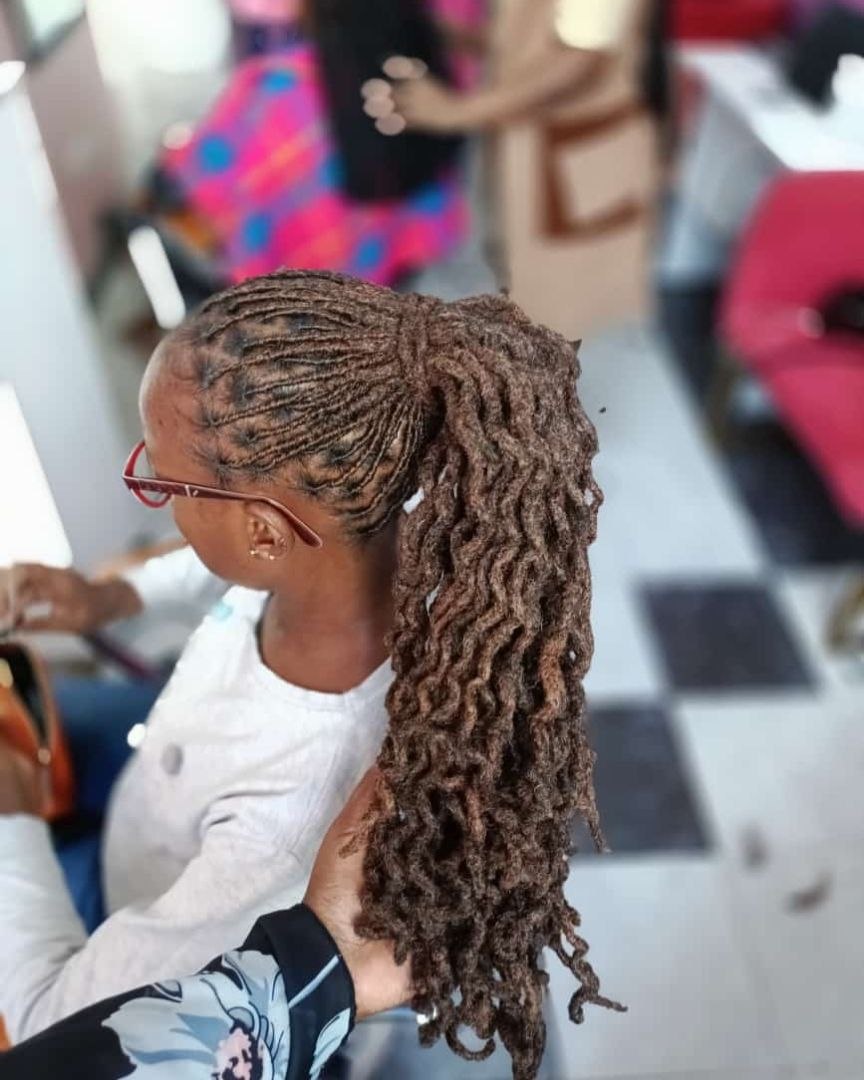
Loc Maintenance Tips in Kenya - Everything Your Loctician Wishes You Already Knew
Everything you need to know about maintaining your locs between salon visits in Nairobi — washing schedules, retwist frequency, scalp care, and the best products for Kenya's climate.
Let’s be honest about something that doesn’t get said enough in the loc community: the salon is not where your loc journey is made or broken. It’s the six weeks between appointments that really determine whether your locs are thriving or just surviving.
You’ve probably heard someone say locs are “low maintenance.” And look — that person wasn’t lying. Fully mature, well-established locs genuinely are one of the most freeing hairstyles you can wear. But that freedom? It’s earned. Getting there requires a real routine, real products, and a real understanding of what your hair actually needs at each stage of the journey.
We’ve been doing locs at Fabz Hair and Beyond across our Embakasi, CBD, and Kitengela studios long enough to know exactly where clients go wrong between visits. We’ve seen beautiful locs that were quietly being destroyed by the wrong products. We’ve seen itchy scalps that turned into serious issues because they were ignored. And we’ve seen clients come in for a retwist every two weeks — meaning well, but actually thinning their own edges in the process.
This guide is everything we tell our clients. Consider it your between-visits bible.
First, Know Your Loc Stage — Because It Changes Everything
Before we get into washing schedules and product lists, there’s something you need to understand: loc maintenance is not one-size-fits-all. What you do for your hair in month two looks completely different from what you do in year two — and confusing the two is one of the most common mistakes we see.
Starter or baby locs (0–6 months) are in their most fragile phase. Your hair is still figuring out what it’s doing. The locs are forming, but they haven’t built internal structure yet, which means they can unravel with surprisingly little provocation. At this stage, less is genuinely more. You want to minimise manipulation, keep products as light as possible, and be gentle with washing. The biggest risk here is over-enthusiasm — retwisting too often, trying too many products, styling too aggressively. Resist all of it.
Teenage locs (roughly 6–18 months) are locking but still consolidating. You’ll notice more frizz and fuzzing at this stage — that’s completely normal, not a sign that anything is going wrong. Your locs are doing exactly what they’re supposed to do. They’re stronger than baby locs but still forming, so product choices become more important and you can handle more regular washing. The temptation to try lots of new styles is real at this stage; just be mindful about tension at the roots.
Mature locs (18 months and beyond) are where all the early work pays off. Fully locked, strong, and flexible. You can handle more frequent washing, more styling, and your maintenance routine becomes more about keeping things balanced — moisture, cleanliness, scalp health — than about protecting fragile new growth. This is the “low maintenance” stage people talk about, and it’s earned.
Everything in this guide applies across all three stages, but we’ll flag wherever the advice shifts depending on where you are in your journey.
Retwist Frequency: Let’s Give You a Real Answer
This is genuinely the question we get asked more than any other. “How often should I come in?” And honestly, the most truthful answer is: it depends — but here’s exactly what it depends on.
For most clients, the sweet spot is every four to six weeks. That’s enough time for meaningful new growth at the root, which gives your loctician something to actually work with, without letting things go so long that the new growth starts matting unpredictably into neighbouring locs.
For clients with faster-growing hair, or for anyone who swims regularly, exercises intensely, or spends a lot of time outdoors in Nairobi’s dust — every three to four weeks makes more sense. Your lifestyle matters just as much as your hair type.
For mature locs where the hair grows more slowly (or where you’re going for a looser, more freeform aesthetic), six to eight weeks between appointments is completely fine.
Here’s the part nobody warns you about: retwisting too often is actually harmful. We know it feels counterintuitive — surely more maintenance means better locs? But every retwist creates tension at the root. Do that too frequently and you’re putting repeated stress on the same fragile area before it’s had a chance to recover. The result, over time, is thinning at the root — sometimes permanently. Clients come to us with thinning edges and are genuinely shocked when we explain that their monthly retwist habit is the likely culprit.
On the other side, leaving new growth for too long means it starts matting in ways that don’t follow your established loc pattern. That makes the retwist session harder, longer, and sometimes uncomfortable. It can also mean your loctician has to work more aggressively to sort things out — which isn’t great for your scalp.
A practical rule of thumb: when the new growth at your roots starts to look and feel noticeably different in texture from your established locs — usually around an inch of growth — it’s time to book. You can check our retouch service to see what a professional tidy-up involves.
Quick Reference Guide
| Loc Stage | Recommended Retwist Interval |
|---|---|
| Starter / baby locs | Every 3–4 weeks |
| Teenage locs | Every 4–6 weeks |
| Mature locs | Every 6–8 weeks |
| Active lifestyle / swimming | Every 3–4 weeks regardless of stage |
How to Wash Your Locs — and How Often
Let’s start by putting a misconception to bed: you absolutely should be washing your locs. Regularly. The old idea that locs form better when you leave them dirty is simply not true. In fact, clean, dry hair locks faster and more evenly than hair coated in old product residue, sebum, and environmental buildup.
Now apply that to life in Nairobi specifically. We’ve got red dust blowing in from all sides during the dry months. We’ve got serious heat that means your scalp is producing more sebum. We’ve got matatus and traffic that deposit pollution on everything, including your hair. Washing regularly isn’t just cosmetically important here — it’s genuinely necessary for scalp health.
So how often? For most people, every two to three weeks hits the right balance. Frequent enough to keep the scalp clean; infrequent enough not to strip your locs of the natural oils they need. If you exercise a lot, swim, or work outdoors, you might find weekly washing works better for you. That’s completely fine — just make sure you’re using gentle, residue-free products and that you’re drying thoroughly every time.
Yes, over-washing is a real thing. It can lead to a dry, itchy scalp and coarser loc texture. But under-washing — which is far more common — creates buildup, odour, and scalp conditions that become genuinely difficult to reverse. Find your personal frequency and stick to it.
On Products
Use a residue-free, sulphate-free shampoo designed for natural or loc’d hair. You want something that cleans without leaving anything behind inside your locs. Marini Naturals — a Kenyan brand made right here in Nairobi — produces a range formulated specifically for natural and dreadlocked hair that you can find at major supermarkets and chemists across the city. Their products are built for our hair type and our climate, which makes a real difference.
Two things to actively avoid:
Conditioner — This one surprises people. Conditioner is designed to prevent knots from forming. Your locs are knots. Using conditioner actively slows down the locking process, especially in the baby and teenage stages. Leave it alone.
Wax — This is a big one. Wax was pushed heavily as a locs product for years, and it’s caused a lot of damage. Certain waxes act as lubricants and slow down locking. Others trap moisture and product residue deep inside the loc, creating the conditions for mould — what the loc community calls “dread rot.” There is no good reason to use wax on your locs. Ever.
How to Wash Properly
Dilute a small amount of shampoo in a cup of water before applying — this helps it distribute more evenly and rinse out more cleanly. Apply to your scalp first and massage gently with your fingertips (not your nails — more on that in the scalp section). Work down the length of your locs, squeeze gently, and rinse thoroughly. Be patient with the rinse; it takes longer for water to fully flow through locs than through open hair.
After washing: dry your locs completely before covering them. In Nairobi’s humidity, locs that stay damp under a bonnet for hours will develop a musty smell that is very difficult to fully remove. Sit in the sun if you can — it’s one of our natural advantages. Or use a diffuser on a low heat setting.
Moisturising Between Washes — What to Use and How Often
This is where Nairobi’s climate makes the biggest difference compared to advice you’ll find from international loc creators.
We deal with an equatorial sun that is relentless — it dries locs from the outside while the heat draws moisture from within. We deal with dust that coats the hair. And then we go indoors into offices and cars that are air-conditioned, which pulls even more moisture out. Your locs are constantly losing hydration in ways that people in London or Toronto simply don’t experience.
The response to that is regular, lightweight moisturising — not heavy creams, not butters, not waxes. The keyword is lightweight. Heavy products sit on top of the loc and eventually seep inside, creating the buildup that’s so hard to remove. Light oils and water-based mists absorb easily, nourish without residue, and work with your loc structure rather than against it.
What Works Well
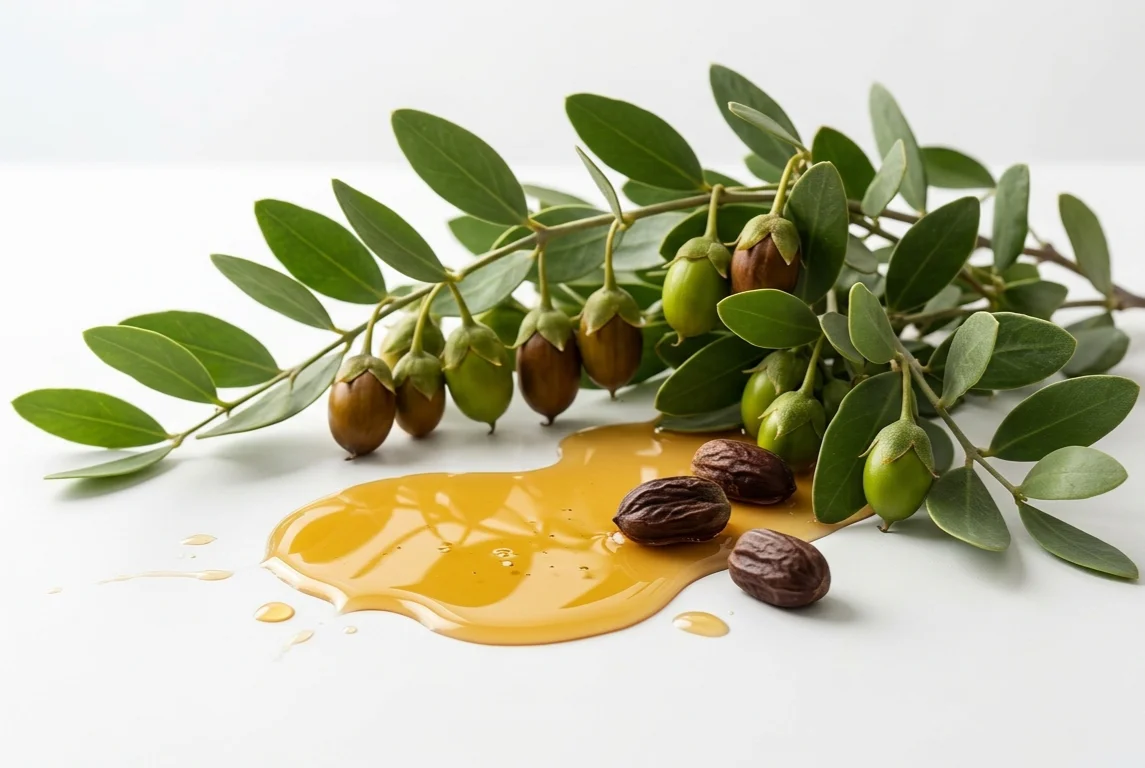
- Jojoba oil — widely regarded as the closest oil to the scalp’s own sebum. It absorbs beautifully and doesn’t clog.
- Castor oil — thicker but brilliant for scalp health and edge strength. Use it sparingly at the roots.
- Coconut oil — great for moisture retention and shine, but use a light amount, especially in the early stages.
- Argan oil — lighter still, excellent for length and for giving mature locs a healthy sheen.
- A daily hydrating mist — the simplest thing you can do. Mix water and aloe vera juice in a spray bottle, spritz your locs lightly every morning. That’s it. Aloe vera is a genuine hero ingredient for loc moisture and it costs almost nothing in Kenyan supermarkets.
How Often
A light spritz daily takes thirty seconds and makes a visible difference over time. Apply oil to your scalp every two to three days, working it in gently with your fingertips. Once a month, consider a slightly deeper treatment — warm a small amount of oil in your palms and work it through the full length of your locs before covering loosely overnight with a satin bonnet.
Always start at the scalp. That’s where your hair is growing from, where blood flow matters, where the health of every loc originates. Treating the length and neglecting the scalp is like watering the leaves of a plant instead of the soil.
Scalp Care: The Part Most People Skip
Your scalp is the foundation of your entire loc journey. Everything your locs are and will become grows from there. And yet so many people focus entirely on the visible loc — the length, the retwist, the style — while completely ignoring the skin they’re growing from.
Common Scalp Issues We See at Fabz
Itching is the most common complaint, and it’s almost always caused by one of two things: buildup from products that weren’t fully washed out, or infrequent washing that allows sebum, dust, and dead skin to accumulate. The fix is usually a better washing routine and switching to lighter products — not scratching, which introduces breakage at the root.
Flaking can indicate either dryness (common during Nairobi’s dry months or for clients who work in heavily air-conditioned environments) or a fungal condition like seborrheic dermatitis. Dryness responds well to scalp oiling. If it persists despite good moisture habits, see a dermatologist — some scalp conditions need medical treatment, not just better hair products.
Tenderness after a retwist is normal for 24–48 hours. Persistent tenderness between visits usually means your last retwist was too tight. Mention it at your next appointment — a good loctician will adjust.
Simple Remedies That Work
For itchy scalps, dilute a few drops of tea tree oil in a carrier oil (jojoba or coconut) and apply to the scalp between washing days. Tea tree is naturally antibacterial and antifungal, genuinely soothing, and you can find it at any pharmacy or supermarket in Nairobi. It’s one of the simplest and most effective tools in your scalp care kit.
Once a month, do an apple cider vinegar rinse. Mix one part ACV with three to four parts water, pour it over your locs after shampooing (but before your final rinse), leave it for a couple of minutes, then rinse thoroughly. It clarifies product buildup, restores your scalp’s natural pH, and eliminates any odour. Clients who start doing this monthly are almost always amazed at the difference.
What you should never do: use your fingernails to scratch at or between your locs. It feels good in the moment but it causes micro-tears at the root — the most vulnerable part of the loc — and over time creates breakage that is very difficult to reverse.
Protecting Your Locs at Night
This section is short, but please don’t skip it. What happens while you sleep has a surprisingly significant impact on your loc health over time.
Cotton pillowcases are the enemy. Cotton is absorbent and rough. It pulls moisture out of your locs while you sleep, creates friction that causes frizzing and breakage, and — this one annoys people — deposits tiny cotton fibres into your locs that become progressively harder to remove. If you’ve ever wondered where that lint in your locs is coming from, it’s often your pillowcase.
The solution is simple: satin or silk. Either a satin bonnet or headscarf to cover your locs before bed, or a satin pillowcase if you find coverings uncomfortable in Nairobi’s warm nights. Either works. What matters is eliminating the cotton contact.
One important warning: if you’ve washed your locs during the day, make sure they are completely dry before covering them at night. Nairobi’s humidity means damp locs trapped under a bonnet overnight are a recipe for that mildew smell — and once it’s in there, it takes a serious deep-cleanse session to get it out.
For longer locs, a loose pineapple (gathering your locs gently on top of your head) or a low bun before bed protects your length from friction without putting stress on your roots. It also helps your locs keep their shape and reduces frizzing overnight.
Nairobi Life and Your Locs: A Few Things Worth Knowing
Most loc maintenance guides are written for climates and lifestyles that are nothing like Nairobi. So here’s the local knowledge.
If you swim: Nairobi’s growing gym culture means more and more loc wearers are swimming regularly — great for fitness, potentially rough on locs if you’re not careful. Chlorine in pools is drying and can bleach and weaken your loc fibre over time. Before you get in the pool, saturate your locs completely with clean water first. Hair that’s already full of fresh water absorbs far less of the chlorinated pool water. After every swim, rinse your locs thoroughly and apply a light oil. Don’t let chlorine or salt (if you swim at coastal resorts) sit in your hair.
If you commute through dusty areas: Nairobi’s dry season, particularly along routes through Embakasi, Eastlands, South C, and major construction corridors, can be brutal for locs. Red dust settles into the loc texture and causes scalp irritation for some people. A light scarf or head wrap during long matatu rides or outdoor exposure isn’t just a fashion statement — it’s a practical maintenance tool. Your locs will be genuinely cleaner between washes if you protect them in dusty conditions.
The equatorial sun: It’s relentless, and it affects your locs more than you might realise. UV exposure bleaches the outer layer of the loc fibre over time, which changes the colour and texture. It also dries them out faster than in temperate climates. If you spend extended time outdoors — at open-air events, playing sports, on construction sites, at the market — a hat or UV-protective loc spray goes a long way. This is especially worth noting for clients with coloured locs, where UV damage is more visually obvious.
The Most Common Loc Maintenance Mistakes (And How to Fix Them)
We want to end this section with a bit of tough love, because these are things we see constantly at the salon.
Retwisting too often is number one by a significant margin. We understand the impulse — your roots look fluffy, you want them neat, you reach for the retwist gel. But roots need recovery time between sessions. If you’re coming in more than once a month during the baby loc phase, or more than every four weeks during the teenage and mature stages, you are likely doing more harm than good. Book less frequently, not more.
Using the wrong products is a close second. If you’re using a conditioner because it’s “moisturising” — stop. If you bought a wax because someone at the market said it’s good for locs — stop. If you’re using a heavy shea butter generously all over your locs because it feels nourishing — use a lot less. The inside of a loc is not somewhere you can easily clean out. Every product that goes in stays in until you do a serious clarifying treatment. Choose what goes in carefully.
Not drying properly. This causes more unpleasant experiences than people realise. Dry your locs. Every single time. Completely.
Neglecting the scalp entirely. If your scalp is itchy, flaking, or tender and you’ve been ignoring it for months, please don’t ignore it any longer. These things don’t go away on their own — and they affect the health of every loc growing from that scalp.
Leaving it too long between professional appointments. Home maintenance is valuable and important, but it’s not a replacement for professional assessment. There are things a trained loctician sees and corrects that you simply cannot catch in a mirror — uneven matting, early signs of thinning, scalp conditions developing under the loc. Think of your salon appointments as your loc’s health check, not just its styling session. If you haven’t been in a while, read our guide on how to maintain your locs at home in the meantime.
Signs It’s Time to Book Your Next Appointment
Here’s a simple checklist. If any of these apply, it’s time to pick up the phone:
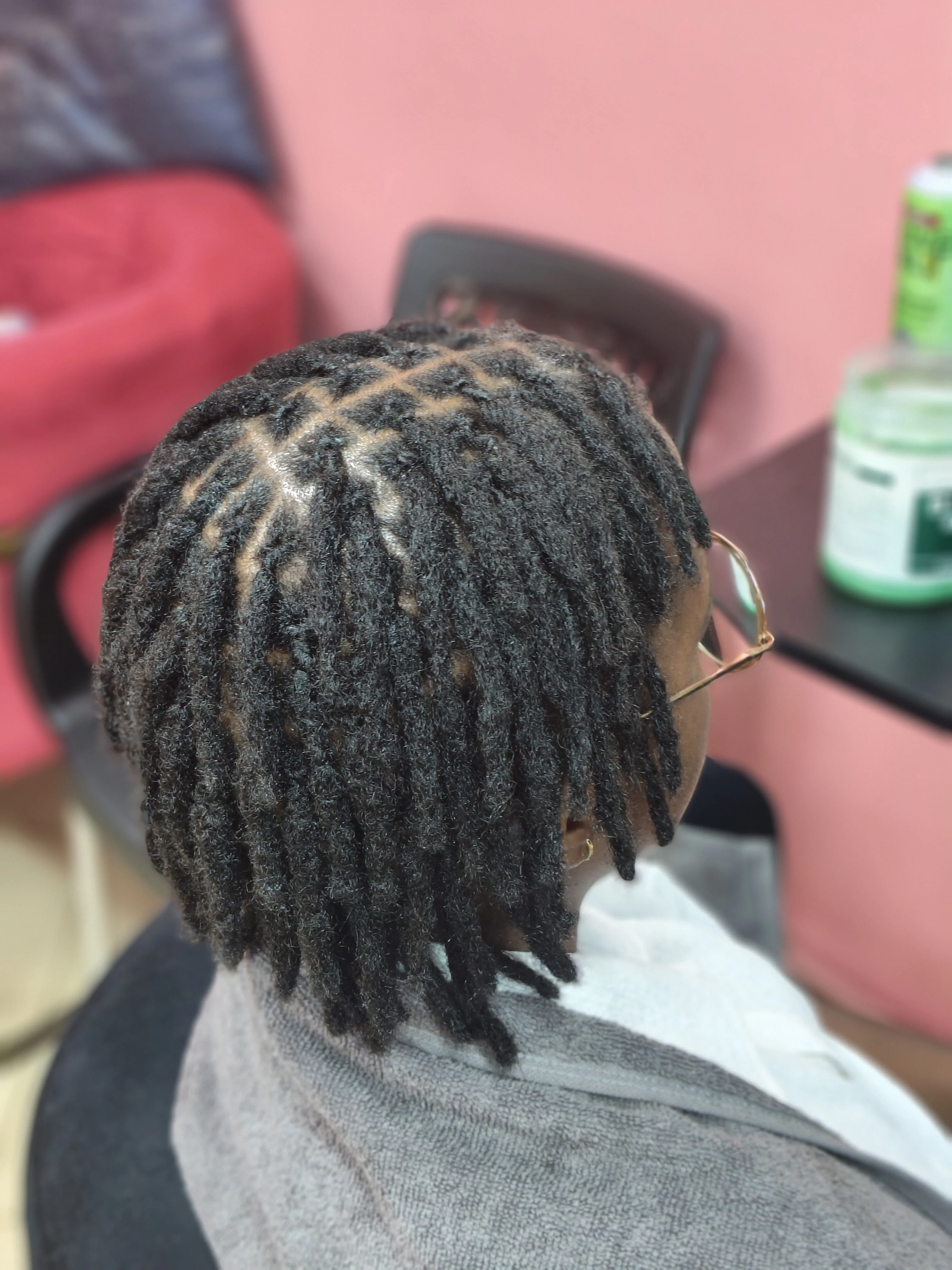
- Your new root growth is more than an inch and you can feel it starting to clump into neighbouring locs
- Your scalp has been itching persistently for more than a week despite your home routine
- You can see visible grey or white buildup at the root that doesn’t respond to washing
- Your locs feel unusually dry and brittle even though you’ve been moisturising consistently
- It’s been more than eight weeks since your last professional retwist
- You’ve got an important event coming up and you want your locs looking their absolute best
Any of the above sound familiar? We’ve got you. Book your next retwist with Fabz Hair and Beyond from KSh 1,000 — at our Embakasi, CBD, or Kitengela studios.
📞 Call or WhatsApp: 0708 225 991
🌐 fabzhairandbeyond.co.ke
Your Locs, Your Routine
Here’s the truth about all of this: the perfect loc maintenance routine is the one you’ll actually do. Consistently.
You don’t need to spend a fortune on products. You don’t need an elaborate ten-step system. What you need is: clean scalp, light moisture, silk protection at night, and a professional retwist at the right interval for your hair and your lifestyle. Start there. Build from there as you learn what your specific hair responds to.
And remember — your loctician is a resource, not just a service provider. At Fabz, we genuinely love talking through personalised maintenance plans with clients. If you’re not sure what your hair needs, come in and ask. That conversation is part of what we’re here for.
Your locs are worth the care. They’ll show you — and everyone else — exactly that.
Frequently Asked Questions About Loc Maintenance in Kenya
How often should I retwist my locs in Nairobi?
The recommended interval for most clients is every four to six weeks. Clients with an active lifestyle — especially those who swim or exercise intensely — may need to come in every three to four weeks. Waiting longer than eight weeks risks unpredictable matting of new growth. Over-retwisting (more than once a month) weakens roots and should be avoided.
What are the best products for locs in Kenya?
Lightweight oils work best in Kenya’s climate — jojoba, castor, coconut, and argan oil are all excellent choices. For a locally made, widely available option, Marini Naturals (manufactured in Nairobi) produces a range formulated specifically for natural and dreadlocked African hair, including growth oils containing castor, jojoba, and sweet almond oil. Avoid waxes, heavy butters used in excess, and any conditioner during the active locking stages.
Can I wash my locs at home between salon visits?
Absolutely — and you should. Washing every two to three weeks with a residue-free, sulphate-free shampoo keeps your scalp healthy and your locs maturing well. Active clients or those exposed to Nairobi’s dust may benefit from washing more frequently. Always dry your locs completely after washing.
How do I stop my scalp from itching with locs?
Persistent scalp itch is almost always caused by product buildup or insufficient washing. Address it with a more consistent washing routine, lighter products, and a diluted tea tree oil scalp treatment applied between wash days. A monthly apple cider vinegar rinse also helps clarify buildup and restore scalp pH. If itching continues despite these steps, it’s worth consulting a dermatologist, as some scalp conditions require medical treatment.
Is it normal for locs to look frizzy during the teenage phase?
Yes — completely normal and actually a sign of healthy locking. Frizz during the six-to-eighteen-month phase is your hair actively locking together. Do not try to “fix” it with heavy products or excessive manipulation. Keep it clean, keep it moisturised, and trust the process.
Looking for a trusted locs salon in Nairobi? Read our guide to the Best Locs Salon in Nairobi.
Fabz Hair and Beyond — Embakasi | Nairobi CBD | Kitengela
📞 0708 225 991 | fabzhairandbeyond.co.ke